
Timkat is the Ethiopian Orthodox celebration of Epiphany — the baptism of Jesus Christ in the River Jordan. It falls on January 19 each year (January 20 in Ethiopian leap years), and it is one of the most visually extraordinary religious events in Africa.
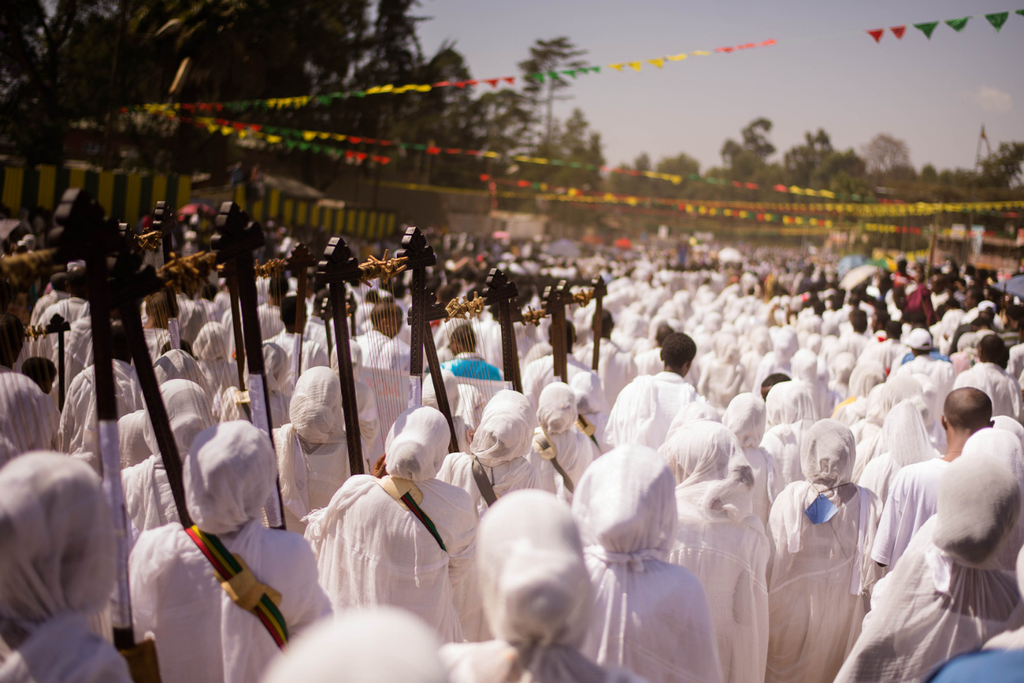
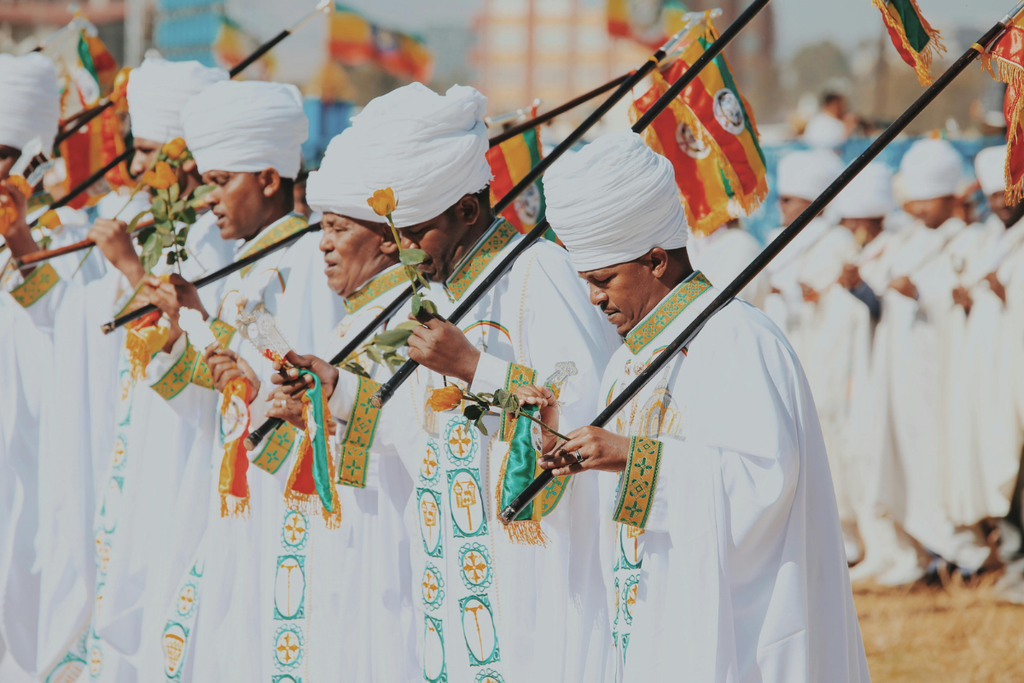
The celebration is centred on the Tabot, a replica of the Ark of the Covenant kept in every Ethiopian Orthodox church. For three days, the Tabot leaves the church, is carried in procession to water, and returns. Around it: priests in gold and crimson robes, deacons with prayer sticks and censers, thousands of white-robed worshippers singing through the night.
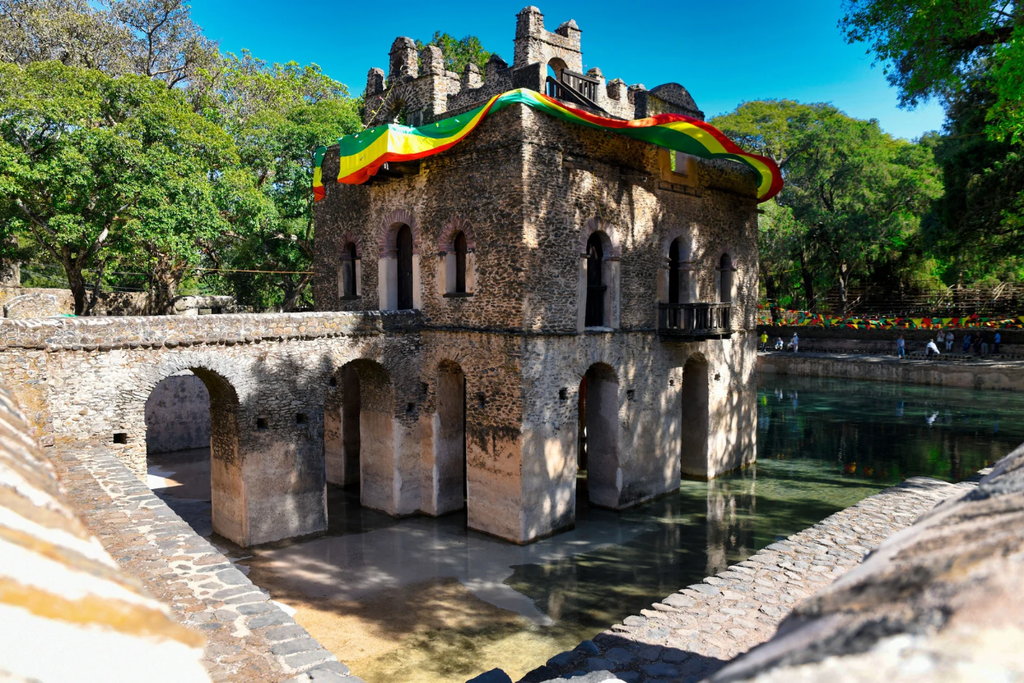
The most famous celebration takes place in Gondar, at the royal pool known as Fasilides Bath. On the morning of January 19, the pool is blessed and opened. People jump in. The images are unlike anything else Ethiopia produces.
This guide explains what Timkat is, what the ceremonies involve, and where and how to witness it.
What Is Timkat?
Timkat commemorates the baptism of Christ — the moment in the Gospels when Jesus enters the River Jordan, the heavens open, and the Holy Spirit descends. In the Ethiopian Orthodox tradition, this is not merely a historical commemoration. It is a renewal of baptism for every believer present. When the water is blessed, it carries the same power as the original waters of the Jordan.
The festival lasts three days:
January 18 (Ketera): The eve of Timkat. The Tabot is brought out of the church in a procession that begins in the late afternoon and continues into the night. This is the most dramatic visual moment of the festival — the Tabot, wrapped in cloth and carried on a priest’s head beneath a ceremonial umbrella, moving through streets filled with singing and firelight.
January 19 (Timkat): The main day. Before dawn, the priests perform a service beside the water. The water is then blessed and sprinkled on the congregation. At Fasilides Bath, the pool is opened and people enter the water in a mass renewal of baptism. The Tabot returns to its church in a second procession.
January 20 (Feast of St. Michael): The final day, observed by those who follow the complete three-day cycle. Quieter, more devotional in character.
The Tabot: What It Is and Why It Matters
To understand Timkat, it helps to understand the Tabot.
Ethiopian Orthodox theology holds that a consecrated replica of the Ark of the Covenant — the Tabot — resides in the Holy of Holies of every Ethiopian Orthodox church. This is what makes the church sacred: not the building, but the Tabot inside it. No layperson ever sees it. It is wrapped in cloth and never exposed.
At Timkat, the Tabot is carried out of the church — the only time it leaves — and taken in procession to water. This mirrors the journey of the Ark of the Covenant in the Old Testament, and it echoes the moment of Christ’s baptism. The parallel is deliberate: the Ark, the Tabot, the waters of the Jordan, the baptismal pool — all connected in the same ritual logic.
Understanding this makes the procession intelligible in a way it isn’t if the Tabot is treated as merely ceremonial. For the priests carrying it, and for the congregation following it through the dark streets, this is not pageantry. It is theology enacted in physical space.
The Ceremonies: What Happens and When
The Procession (Ketera — Evening of January 18)
The procession begins in the late afternoon as the sun drops. Priests emerge from the church carrying the Tabot — hidden under embroidered cloth — on their heads, beneath a ceremonial fringed umbrella held by an attendant. Deacons follow with prayer sticks (mequamia), censers releasing incense, and hand-held crosses.
Behind them, the congregation: thousands of people in white cotton robes (shema or gabi), singing liturgical hymns, carrying candles or torches. The procession moves through the streets to a designated outdoor space near water — a river, a pool, a lake — where the Tabot will remain overnight.
In Gondar, this procession ends at Fasilides Bath. The Tabot is placed in a tent beside the pool. Through the night, priests chant continuously. Worshippers remain nearby, some keeping vigil until dawn.
The Blessing of the Water (January 19 — Pre-Dawn)
Before sunrise, the lead priest performs a liturgy at the water’s edge. The water is blessed with crosses and prayer. At Fasilides Bath, this is the moment the pool fills — water is channelled in from a nearby stream, the ceremony takes place, and then the pool is declared open.
This is the theological centre of Timkat: the moment the water becomes holy.
The Bath (January 19 — Morning)
At Fasilides Bath, after the blessing, people enter the pool. There is no solemnity to this — it is joyful, chaotic, communal. Young men jump from the walls. Priests continue chanting from the edge. Families wade in together. The renewal of baptism happens through immersion in blessed water, and the atmosphere is closer to celebration than ceremony.
This is the image most associated with Timkat internationally, and it is genuinely extraordinary: a centuries-old royal pool filled with white-robed worshippers, priests in gold and red along the edges, the castles of Gondar’s royal enclosure visible behind the trees.
What It Feels Like to Be There
No description of Timkat fully prepares a visitor for the Ketera procession at night.
The procession begins before dark, but by the time it reaches Fasilides Bath the sky is black. The streets of Gondar narrow as the crowd thickens. Incense moves through the air in waves — heavy, sweet, disorienting in a way that is not unpleasant. The chanting has been continuous for hours and has a physical quality to it, less like music and more like pressure. Candles and torches appear in the crowd ahead, then more behind, until you are enclosed in a moving column of light and white cotton and sound.
The priests arrive carrying something wrapped and hidden, moving at the centre of all of it with a composure that makes the intensity of everything around them stranger. Around them the deacons are dancing — a specific, rhythmic movement with the prayer sticks, controlled and ancient-looking. Nobody is performing this for you. You are standing inside something that has been happening, in this form, for centuries.
Most visitors describe the night of January 18 as the part that stays with them longest. Not the bath — which is spectacular — but the procession, in the dark, before anything has been explained.
The Return Procession (January 19 — Late Morning)
After the bath, the Tabot is carried back to its church in a second procession. This is less dramatic than the Ketera procession but still significant: the Ark returning home, the cycle complete.
Where to Experience Timkat
Gondar — Fasilides Bath
Gondar is the principal destination for Timkat in Ethiopia, and Fasilides Bath is the reason. The pool — built in the 17th century by Emperor Fasilides, used annually for Timkat ever since — provides a setting that no other venue in the country can match. The combination of the water, the castles, the crowds, and the ceremony is what produces the images that define Timkat internationally.
Gondar’s Timkat draws large numbers of both domestic and international visitors. The city’s hotels fill completely; book well ahead. The procession on the evening of January 18 moves through the town centre before arriving at the Bath — the streets narrow in places, and the combination of firelight, incense, and white robes in the dark is one of the more affecting things available to a visitor in Ethiopia.
Lalibela
Timkat at Lalibela is celebrated at the Jordan River — a small stream outside the town that has been given that name for the purposes of the ceremony. The scale is smaller than Gondar, the setting more austere, and the celebration more contained. What Lalibela offers instead is the rock-hewn churches themselves: the procession moves through the church complex, and the priests emerging from Bete Giyorgis in full vestments carrying the Tabot is one of the characteristic images of Lalibela at Timkat.
Lalibela’s Timkat is quieter than Gondar’s and arguably more intimate. The ceremonies feel less like a national event and more like a community observance.
Addis Ababa
The capital celebrates Timkat at Jan Meda, a large open ground northeast of the city centre, with multiple Tabots from churches across Addis arriving in procession and a mass blessing of the water. The scale is vast — Jan Meda holds tens of thousands of people — and the visual effect of multiple processions converging from different directions is impressive. For visitors already in Addis, it is worth attending; as a destination in itself, Gondar or Lalibela offer more concentrated experiences.
Axum
The Axum Timkat carries particular theological weight: Axum is home to the Church of St. Mary of Zion, which Ethiopian Orthodox tradition holds contains the original Ark of the Covenant. The ceremony here has a depth of significance it carries nowhere else, and the setting — among ancient obelisks and royal tombs — is extraordinary. Access requires advance planning and awareness that Axum’s tourism infrastructure is more limited than Gondar or Lalibela.
When to Go and What to Know
Dates: January 19 in most years; January 20 in Ethiopian leap years (the Ethiopian leap year cycle does not align exactly with the Gregorian one — check the specific year when planning).
How long to stay: For Gondar, arrive by January 17 to settle in before the Ketera procession on the 18th. Three nights covers the full ceremony comfortably. A Gondar–Lalibela itinerary combining Timkat in both locations is possible but requires careful logistics; most visitors choose one.
Accommodation: Gondar’s hotels sell out completely for Timkat, often months in advance. This is not an exaggeration — book as early as possible, and confirm your reservation. The same applies to Lalibela.
What to wear: White is worn by Ethiopian Orthodox worshippers at Timkat. There is no expectation that visitors dress in white, but conservative, respectful clothing is appropriate. Covered shoulders and knees near the churches.
Photography: The processions and the bath at Fasilides are photographed openly. Inside and immediately around the churches, follow the guidance of your guide. The Tabot itself is never photographed — this is a firm cultural and religious boundary.
Crowds: Timkat at Gondar and Lalibela draws large domestic crowds in addition to international visitors. The Fasilides Bath area on the morning of January 19 is extremely crowded. Arrive early and position yourself before the blessing begins.
Visiting Timkat with Absolute Ethiopia
Timkat is one of the experiences we build our northern Ethiopia tours around. Our January itineraries are designed to catch the full three days of the ceremony — the Ketera procession, the blessing of the water, the bath at Fasilides — with accommodation arranged well in advance.
We run Timkat tours annually to both Gondar and Lalibela.