
Christmas in Ethiopia falls on January 7. It is called Genna — and it bears little resemblance to Christmas as observed in the West.
There are no decorated trees, no gifts exchanged, no commercial build-up. Genna is a religious occasion: a day of fasting broken by liturgy, a morning spent at church, and a meal shared with family. For Ethiopian Orthodox Christians — around 40% of the population — it is a significant date in the religious calendar, though a quieter one than Timkat (Epiphany, January 19) or Easter.
For visitors, the appeal is specific: witnessing Christmas in a living Orthodox tradition that predates the Western church’s own calendar reforms, in a setting — particularly Lalibela — that makes the occasion feel ancient in a way that few Christian celebrations anywhere in the world still do.
When Is Ethiopian Christmas?
Genna falls on Tahsas 29 in the Ethiopian calendar, which corresponds to January 7 in the Gregorian calendar in most years. (In Ethiopian leap years, it falls on January 8.)
The date difference from December 25 has the same explanation as the Ethiopian New Year falling in September: Ethiopia’s Orthodox Church follows the ancient Alexandrian calendar, which it adopted from early Coptic Christianity and never replaced with the 1582 Gregorian reform. January 7 is also the date observed by Russian, Serbian, and other Eastern Orthodox churches that continue to use the Julian calendar — Ethiopia is not alone in this, though it arrives at the date through its own distinct theological tradition.
What Genna Involves
The Eve (January 6)
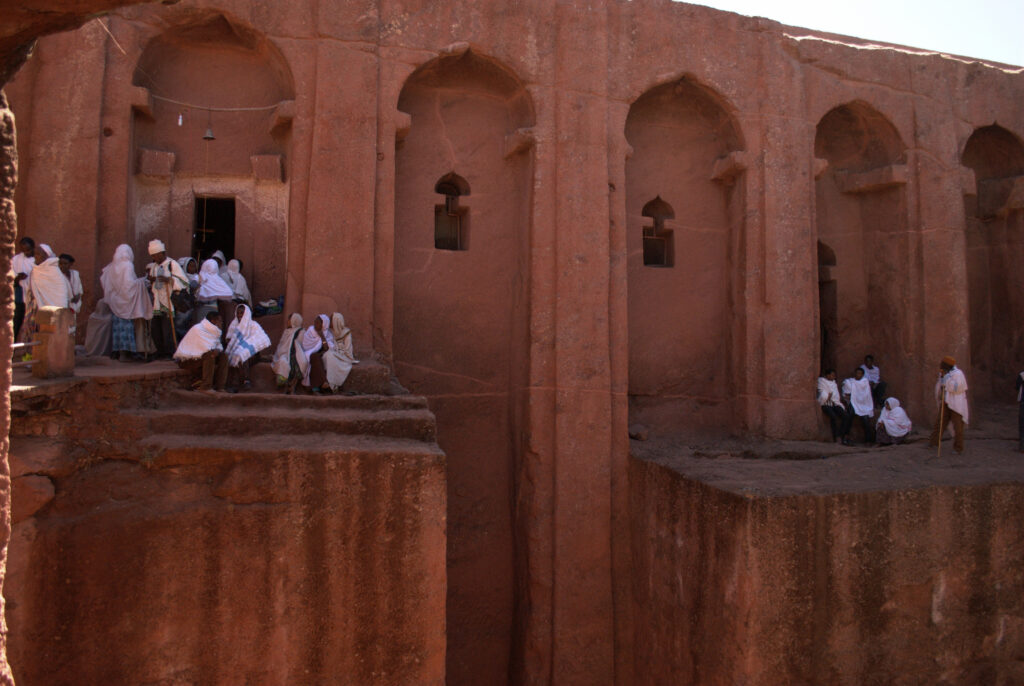
Genna begins the evening before, on January 6. Ethiopian Orthodox Christians observe a strict fast on Christmas Eve — no meat, no dairy, eating only after the evening church service. Churches hold a vigil service that begins late at night and runs through to the early hours of January 7. In Lalibela, these overnight services, held inside and around the rock-hewn churches by candlelight, are one of the more affecting things Ethiopia offers a visitor.
Christmas Morning (January 7)
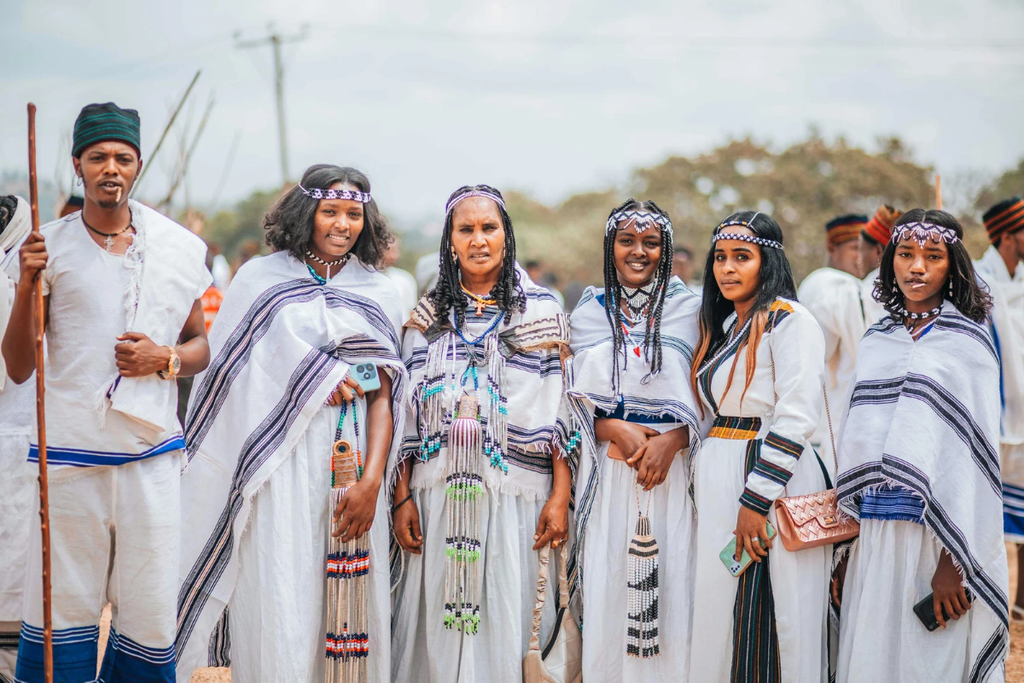
The main liturgy takes place before dawn and continues through the morning. Worshippers dress in white — the traditional shema or gabi shawl — and arrive at their church well before sunrise. The service is conducted in Ge’ez, the ancient liturgical language of the Ethiopian Orthodox Church, which has not been spoken as a vernacular language for centuries but remains the language of the liturgy, the scriptures, and the chant.
Priests wear ornate ceremonial robes — gold, red, embroidered — and carry processional crosses. The combination of candlelight, incense, continuous chant in an ancient language, and the white-robed congregation is visually and atmospherically unlike any other Christmas service most visitors will have attended.
The Genna Meal
After church, families gather for the Christmas meal. The fast is broken. Doro Wat — the slow-cooked spiced chicken stew that marks every significant Ethiopian occasion — is the centrepiece of the Christmas table, served with fresh injera. Tej, the traditional honey wine, is served alongside it. The meal is domestic and unhurried; Christmas Day in Ethiopia has the quality of a genuine day of rest.

The Game of Genna
Genna gives its name to an ancient field game played on Christmas Day — a stick-and-ball game with some resemblance to field hockey, traditionally played by men and boys in the afternoon after the meal. The game is said to have been played by the shepherds on the night of Christ’s birth. In rural areas and smaller towns, it is still played on Genna afternoon; in Addis Ababa and larger cities it is less commonly seen but not entirely gone.
Where to Experience Genna
Lalibela
Lalibela is the principal destination for Ethiopian Christmas. The rock-hewn churches — eleven in total, carved from solid volcanic rock in the 12th century — provide a setting for the Genna liturgy that is genuinely extraordinary. On Christmas morning, the churches fill with worshippers in white; priests emerge from the carved doorways in ceremonial dress; pilgrims who have walked for days to reach Lalibela pray in the outer courtyards.
The overnight vigil on January 6 is the most affecting moment: inside Bete Maryam or Bete Giyorgis, with candles and incense and chant filling the carved stone space, the age of the tradition is palpable in a way that is hard to describe and difficult to forget.
Lalibela at Genna draws significant numbers of Ethiopian pilgrims as well as international visitors. The town’s accommodation fills completely — book months in advance.
Gondar
Gondar’s Christmas is celebrated at the city’s historic churches, including Debre Berhan Selassie — considered one of the most beautiful churches in Ethiopia, its ceiling painted entirely with the faces of angels. The Genna service here is less crowded than Lalibela and more accessible; for visitors who want to witness the liturgy without the scale of Lalibela’s pilgrim crowds, Gondar is a strong alternative.
Addis Ababa
The capital’s Christmas is celebrated across hundreds of Orthodox churches simultaneously. The largest and most significant is Holy Trinity Cathedral (Kidist Selassie), which holds a major Christmas service attended by thousands. St. George Cathedral is another significant venue. For visitors already in Addis on January 7, attending a service at either church requires no advance arrangement beyond arriving early enough to find a place.
Genna and Timkat: Planning for Both
Genna (January 7) and Timkat (January 19) fall twelve days apart — the same interval as the twelve days of Christmas in the Western tradition, a coincidence that reflects their shared origin in the liturgical calendar.
A single trip to Ethiopia can catch both celebrations. The standard itinerary combines Lalibela for Genna, then either stays in Lalibela for Timkat (celebrated at the Jordan River outside the town) or moves to Gondar for Timkat at Fasilides Bath. Twelve days is enough time to cover both with room for the rest of northern Ethiopia — Axum, the Simien Mountains, Bahir Dar — depending on pace.
This window — January 7 to 19 — is one of the most concentrated periods of cultural experience available in Ethiopian travel.
Practical Information
Dates: January 7 most years; January 8 in Ethiopian leap years.
Accommodation: Lalibela sells out for Genna earlier than almost any other event in the Ethiopian calendar. Book as far in advance as possible — ideally three to six months ahead.
What to expect at the churches: The services are long, conducted in Ge’ez, and not structured for visitors. You are not expected to participate or understand the liturgy. Respectful presence — quiet, conservative dress, following the guidance of your guide on where to stand — is all that is asked. Covered shoulders and knees; shoes removed before entering certain church areas.
Weather: January in the Ethiopian highlands is dry, clear, and cool at altitude. Lalibela sits at around 2,500 metres; evenings and early mornings are cold. Bring a warm layer for the overnight vigil on January 6.
Visiting Genna with Absolute Ethiopia
Our January itineraries are built around Genna and Timkat — catching both within a single northern Ethiopia tour. We handle accommodation in Lalibela well in advance, which is the only way to guarantee a room during this period.
[Get in touch via WhatsApp to discuss January dates →]
[Explore our northern Ethiopia tours →]